
A Wooden Duck, a Fire and a Plastic Brick: How LEGO Started
A carpenter with no customers, a Danish town, two fires and a plastic brick: how LEGO started, and what any small business can borrow.
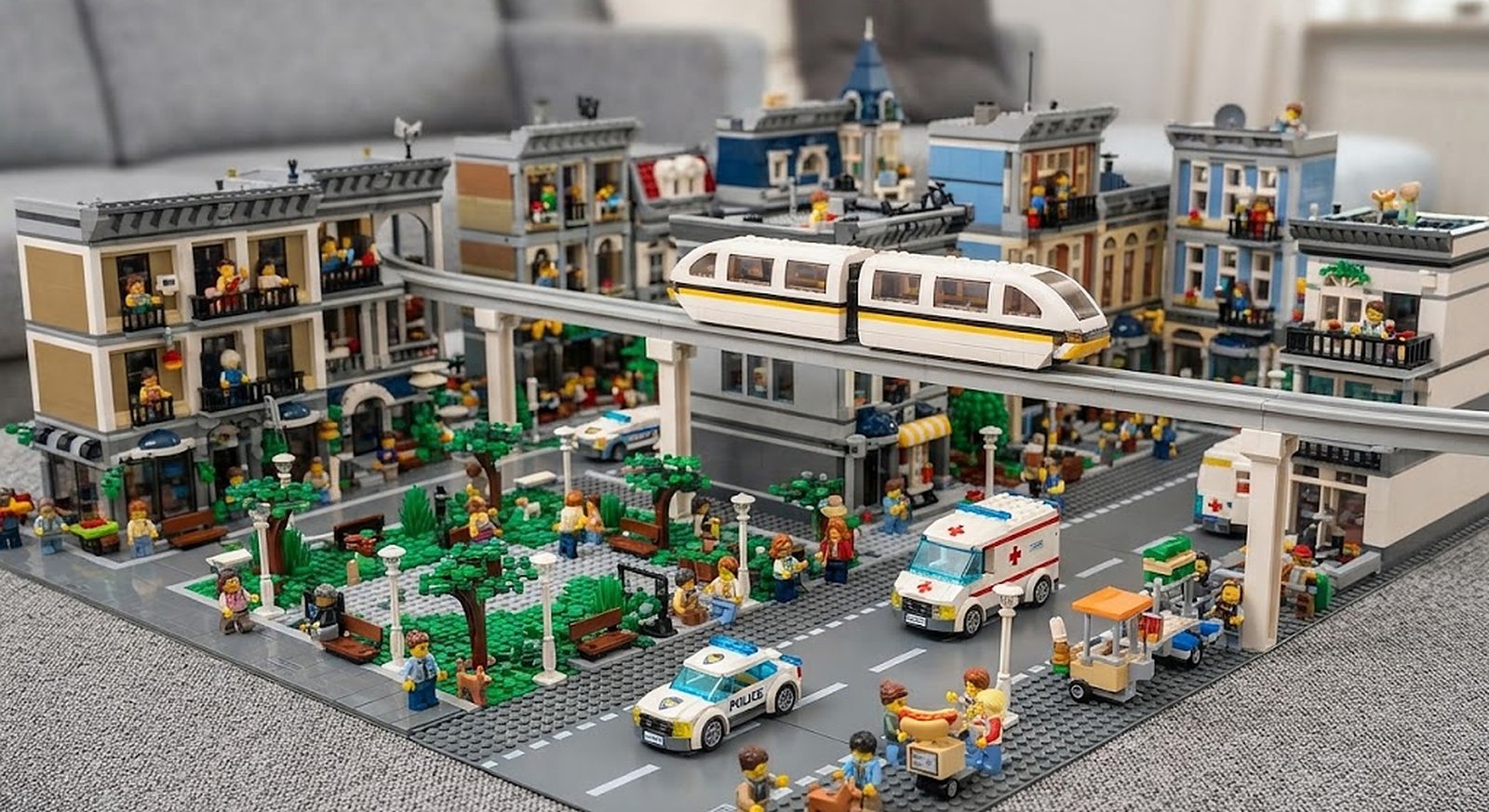
How LEGO started is one of the best small-business stories there is. In 1932, a carpenter in a small Danish town was running out of work. The farmers and families who had once paid him to build furniture and fit windows could no longer afford it, because the Great Depression was squeezing every customer he had.
Ole Kirk Christiansen could have shut his workshop. Instead, he started making things he had never sold before: toys. Today, bricks made in 1958 still fit together with the ones made this year, and the company that came out of that workshop is one of the best-known toy makers in the world.
How LEGO started: a carpenter with no customers
Christiansen worked in Billund, a village in the Jutland region of Denmark. He built houses and furniture, but by the early 1930s orders were drying up. He began making smaller items from the wood he had: stepladders, ironing boards and stools, and then wooden toys such as ducks, cars and animals. Toys were cheap to make from offcuts, and even a family with little money could justify a small gift for a child.
In 1934 he gave the business a name. He took the Danish words leg godt, which mean “play well”, and squeezed them into LEGO. He also set a rule for the workshop that outlived him: only the best is good enough. For a one-man toy business in a tiny town, that was a strange promise to make, but it shaped everything that followed.
A fire, a machine and a plastic gamble
In 1942 a fire destroyed the workshop and factory. He rebuilt it. Then, in 1947, he made a bigger bet: he bought a plastic injection-moulding machine, one of the first in Denmark, at a time when most toys were still wood or metal and plastic had a cheap reputation.
In 1949 the company started making plastic bricks with studs on top and a hollow underside. The idea was not entirely new. A British company, Kiddicraft, already sold self-locking building bricks, and LEGO’s early bricks were inspired by them.
The first LEGO versions also had a weakness: they did not hold together very well, and the toy shops were slow to believe in plastic.
The patent that changed everything
Ole’s son, Godtfred Kirk Christiansen, saw something bigger in the bricks. In the mid-1950s he pushed the idea of a “system of play”, where every piece fits with every other piece, so a child can keep adding to what they already own instead of buying a new, separate toy each time.
The missing piece was the grip. On 28 January 1958 the company filed a patent for a new design: hollow tubes inside the brick that clamp onto the studs of the brick below. Bricks now held firmly, yet still came apart easily. Ole Kirk Christiansen died later that same year, and Godtfred took over the company.
In 1960 another fire destroyed the warehouse that held the company’s wooden toys. Instead of rebuilding that side of the business, LEGO decided to stop making wooden toys and put everything into the plastic brick.
Not a straight line to the top
How LEGO started is only half the story, because success did not last. In the early 2000s LEGO had expanded into so many themes and side projects that it lost a lot of money and came close to going under.
New management cut costs, sold off parts of the business and brought the company back to its core: the brick that connects to every other brick. You can find the full company timeline in the LEGO history on Wikipedia.
What a small business can borrow
- Start with what you have. LEGO began with a carpenter’s tools, his skills and leftover wood, not with a factory.
- Change the product when customers disappear. When furniture orders dried up, toys kept the workshop alive.
- Quality is a business decision. The bricks only work as a system because they are made to extremely small tolerances, a fraction of a millimetre.
- Let go of the old thing. After the 1960 fire LEGO stopped making wooden toys and focused on the product with the future.
- Protect your core idea. When the company lost focus, it recovered by returning to the one product that everything else was built on.
If you are thinking about a business of your own, remember how LEGO started: you do not need a perfect plan on day one. You need something you can make well, a reason people will pay for it, and the patience to improve it.
Browse the business ideas on this site to find one that fits your budget.
More stories
$5,000 and a Pair of Scissors: How Sara Blakely Built Spanx
A fax machine salesperson, a drawer full of unusable pantyhose, and an idea nobody in the industry had tried.
5 min readBeating Piracy at Its Own Game: How Spotify Started
Two Swedish founders, a free service the record labels disliked and a bet that a legal app could beat music piracy: how Spotify started.
4 min readFrom a Car Trunk to a Waffle Iron: How Nike Started
A school paper, two founders with $500 each, a ruined waffle iron and a $35 logo: how Nike started from the trunk of a car.
Ask a question or share your experience