
The Rage Room
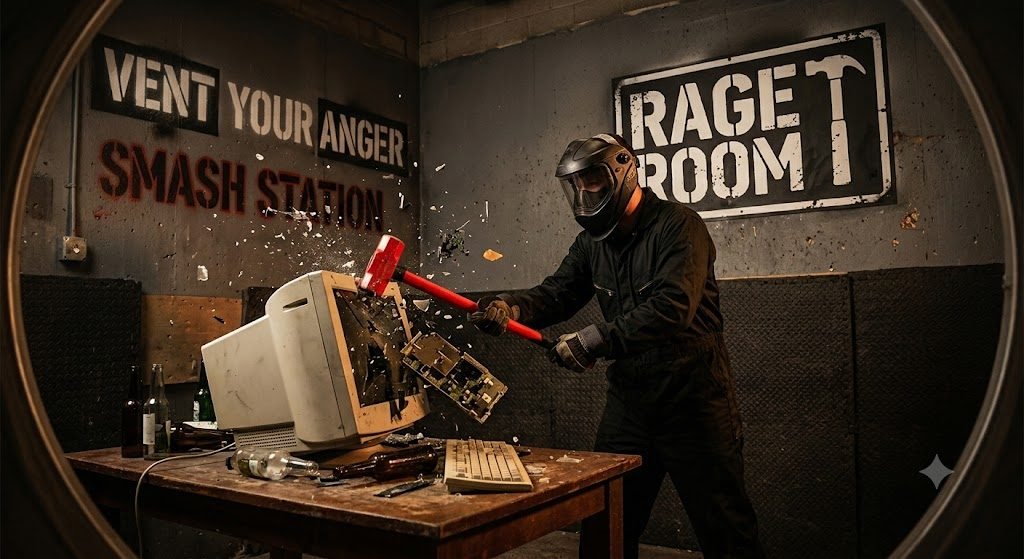
A controlled, safe environment where customers pay to smash old electronics, glass, and furniture to relieve stress.
Why This Idea Works Right Now
People are stressed. Like, a lot. Work pressure, screen fatigue, everyday chaos — everyone’s looking for a release valve. Rage rooms give people exactly that: a physical, loud, oddly satisfying way to let it all out.
This isn’t a new concept anymore, but it’s still nowhere near saturated. Most cities have maybe one or two rage rooms, if any. That’s a wide-open lane.
It’s also cheap to run compared to most entertainment businesses. You’re not buying fancy equipment or hiring specialists. You need space, junk, and safety gear. That’s it.
And here’s the kicker — it’s social media gold. People film themselves smashing a TV with a bat. That content gets shared. Shared content brings in more customers. It’s basically self-marketing.
Equipment and Starting Budget
You don’t need much to get going, but you do need the right stuff. Here’s a realistic breakdown:
- Space rental (small unit, 500-800 sq ft): $800-1,500/month depending on your city
- Protective gear (helmets, coveralls, gloves, face shields): $600-1,000 for a starter set of 10
- Breakable items (old TVs, electronics, glassware, furniture): $300-500 initially — thrift stores, estate sales, and Facebook Marketplace are goldmines here
- Bats, sledgehammers, crowbars: $200-400
- Soundproofing/padding for walls: $500-1,000
- Liability insurance: $100-300/month (non-negotiable, more on this below)
- Basic security camera setup: $150-300
- Waivers, signage, basic branding: $200-300
Total starting budget: roughly $3,000-5,500
That’s a lean number compared to most brick-and-mortar businesses. You could realistically start smaller with a shared space and scale up once bookings pick up.
Step-by-Step Launch Plan
Month 1: Setup and Legal Groundwork
- Find your space. Look for cheap warehouse units, old garages, or industrial spots on the edge of town — you don’t need foot traffic, people will drive to you.
- Get liability insurance sorted before anything else. This is the one thing you cannot skip. Rage rooms involve swinging heavy objects — you need coverage.
- Draft a solid liability waiver. Get a lawyer to look it over, even a cheap one-time consultation is worth it.
- Start collecting breakable items. Ask friends, check curbside pickup days, hit up thrift stores near closing time when they’re clearing stock.
- Soundproof your walls and set up padding so nothing bounces back.
Month 2: Build the Experience
- Set up 2-3 “themed” rooms if space allows (e.g. office rage, electronics smash, glass and dishes).
- Test the whole experience yourself. Time it. Figure out how long a typical session should run (most rage rooms do 15-30 minute slots).
- Create a simple booking system — even a Google Calendar link works at first.
- Take photos and short videos of the space. You’ll need this content before you even open.
- Soft-launch with friends and family. Get their honest feedback and fix anything that feels off.
Month 3: Open and Push for Bookings
- Officially open. Announce it everywhere — local Facebook groups, community boards, everywhere free.
- Run a launch promo (e.g. 20% off first bookings, or a free extra minute per session).
- Start posting content consistently. This is where the real growth begins.
- Ask happy customers to leave reviews and tag you online.
How to Get Your First Customers (Marketing)
Forget traditional advertising for this one. Rage rooms are made for short-form video. Here’s what actually works:
- Post the smash, not just the setup. People want to see impact — glass shattering, sparks off metal, stuff crumbling. Film in slow motion when you can.
- Let customers film themselves. Set up a phone tripod in the room. Customers love having proof of their session, and they’ll post it themselves, tagging you.
- Use trending sounds. Pair smash footage with whatever’s trending that week. It’s a small effort with a big payoff for reach.
- Team up with local influencers. Offer a free session to a local micro-influencer in exchange for a video. You don’t need someone huge — even 5-10k followers in your city can bring real bookings.
- Post “before and after” transformations. Someone walks in stressed, walks out smiling. That emotional arc performs really well.
- Run a “bring your ex’s stuff” promo. Cheeky, shareable, and it writes its own caption.
- Target group bookings. Bachelorette parties, birthdays, office team events — these bring in multiple paying customers per session and often get filmed as a group, multiplying your reach.
Post 3-4 times a week minimum when you’re starting out. Consistency beats perfection here.
Main Risks and How to Avoid Them
- Injuries. This is the big one. Someone could get cut, hit, or hurt swinging a bat in a small space. Fix: solid protective gear for everyone, clear safety briefing before every session, and a supervisor present at all times, never leave customers unsupervised.
- Liability claims. Even with the best precautions, accidents happen. Fix: proper insurance and airtight waivers signed before every session, no exceptions, not even for friends.
- Running out of breakable items. You’ll go through junk faster than you think, especially once you’re busy. Fix: set up ongoing sourcing — partner with a local recycling center, appliance repair shop, or thrift store to get a steady, cheap supply.
- Noise complaints from neighbors. Smashing things is loud. Fix: proper soundproofing from day one, and pick a location that isn’t right next to residential buildings if possible.
- Slow first few weeks. Like any new business, the beginning can be quiet before word spreads. Fix: budget for at least 2-3 months of low revenue, and lean hard into content and local promotion instead of waiting for word of mouth alone.
- Glass and debris cleanup. This eats more time than people expect between sessions. Fix: budget extra time between bookings (don’t overbook back-to-back) and get proper cleanup gear — a shop vac and a squeegee go a long way.
Bottom Line
The Rage Room is one of those ideas that’s low-cost, high-shareability, and taps into something everyone can relate to — stress. Get your safety and insurance right, treat your content like part of the business (not an afterthought), and this can turn into a steady, fun operation with pretty solid margins.
A note on the budget: the figures above are approximate estimates. Costs vary by country and city, and a capable, resourceful person can often get started for less.
More ideas like this
Coin-Toss Barrel Attraction
A fun, local tourist attraction: a large barrel filled with water, with a smaller vase inside. People toss coins for fun, trying to land them in the vase, similar to a wishing well.
$16,000–46,000Themed Airport Parties
Organizing massive, nostalgia-themed events (like 90s parties) in unique spaces like local or abandoned airfields.
$2,350–8,500“Buy a Brick” Personalized Wall
Building a decorative wall (perhaps in a tourist spot or cafe) where people pay to have their name engraved or painted on a single brick.
Ask a question or share your experience